
Hubbs’ Beaked Whale
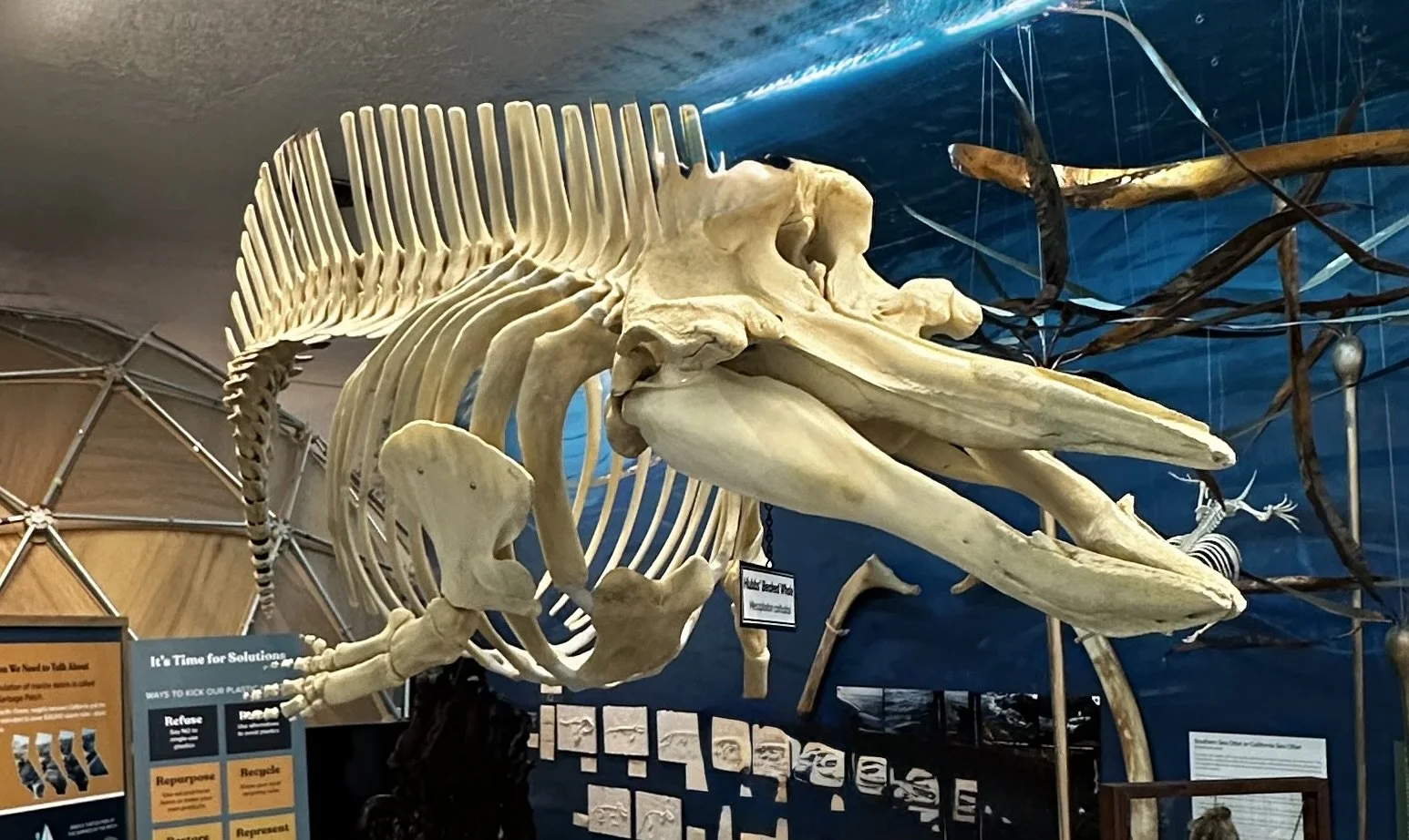
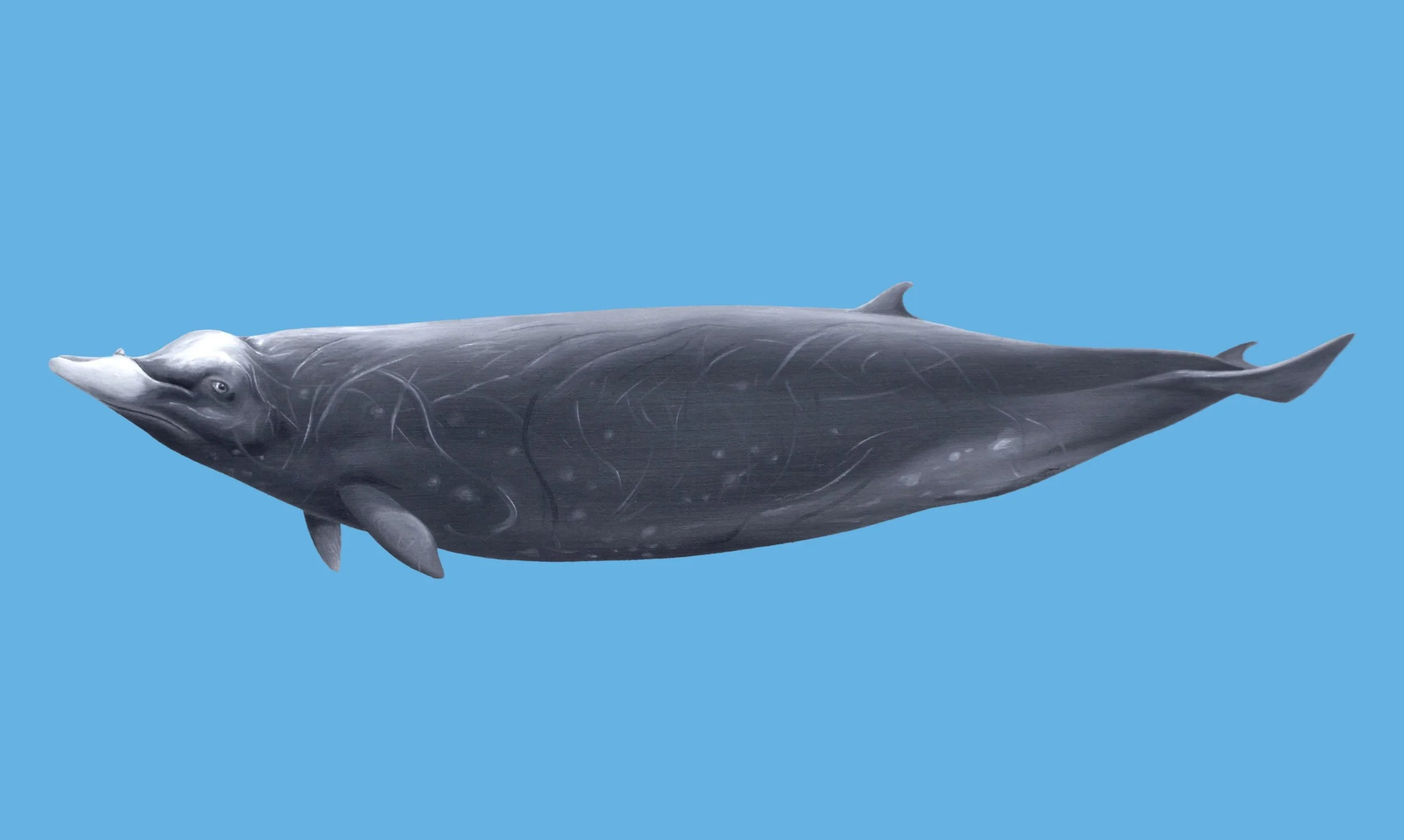
Mesoplodon carlhubbsi (Hubbs' beaked whale) Oil on paper by Jörg MazurHubbs beaked whales are among the most mysterious mammals on Earth—deep-diving, elusive, and rarely seen at the surface. Beaked whales are very difficult to observe due to their elusive nature and deep-ocean habitat. Consequently, most of what is known about Hubb's beaked whales comes from the study of stranded individuals. Hubb's beaked whales have only been identified alive in the wild twice, although there have been over 60 known strandings on both sides of the North Pacific. To learn more, watch our science talk, The Mysteries of Beaked Whales recorded on September 9, 2025.
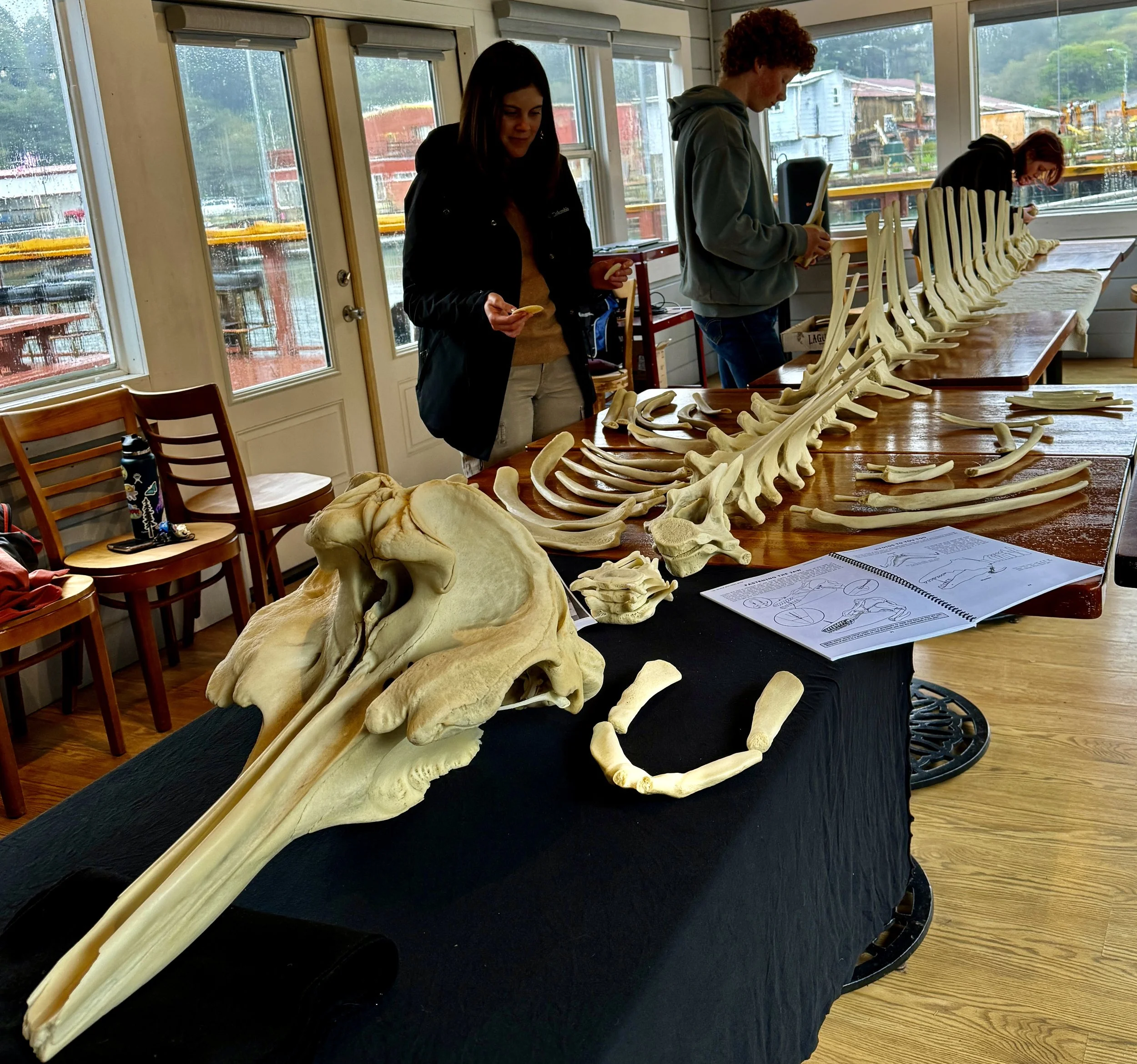
In May of 2022, a female beaked whale washed ashore on the Mendocino Coast just south of Fort Bragg. The Noyo Center Marine Mammal Response Team collected the skeleton of the animal, along with organ and tissue samples, and began the process of identifying the exact species (there are approximately 24 recognized living species of beaked whales in the family Ziphiidae), not knowing at the time what a rare encounter this would turn out to be. Once it was identified, with the help of scientists and whale experts from as far away as Poland, the team knew that articulating the species for our collection would be something very special.
With the help of the funding from a grant from The Spirit of Max Foundation, and a lot of hard work on the part of our collections team and science advisors, including a team of marine mammal specialists from our partners at California Academy of Sciences (CAS), we completed the articulation of this rare skeleton in September, 2025. It is now on display at our Discovery Center Museum in Fort Bragg.
This articulation was different from most others the Noyo Center has undertaken. The skeleton collected on the beach was not complete, likely due to decomposition at sea before she washed to shore. With the help of a CAS specimen, our team is utilizing 3D scanning and printing to replace missing bones. This marriage of technology with specimen articulation is relatively new, and we are excited to have had the opportunity to put it to the test.